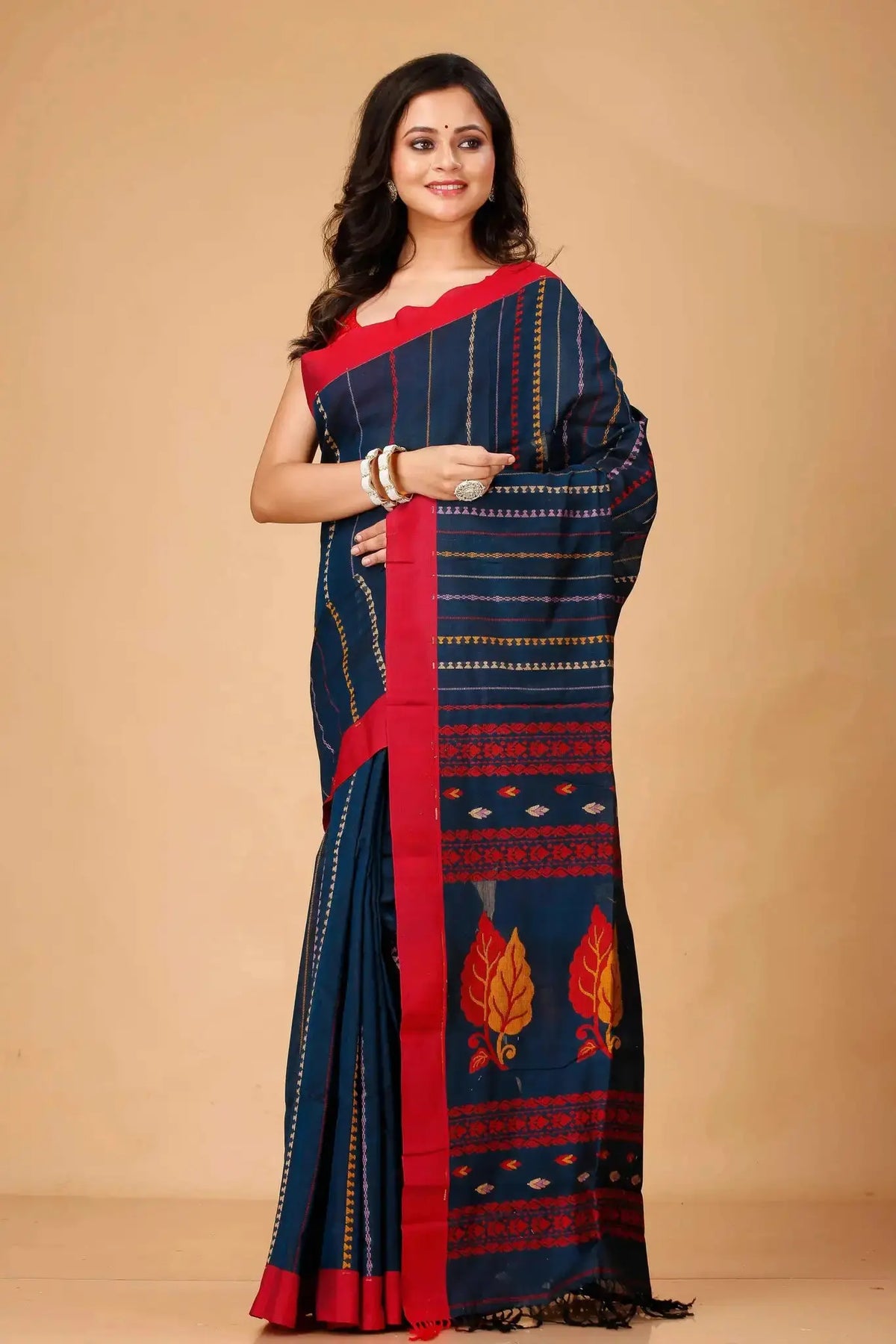
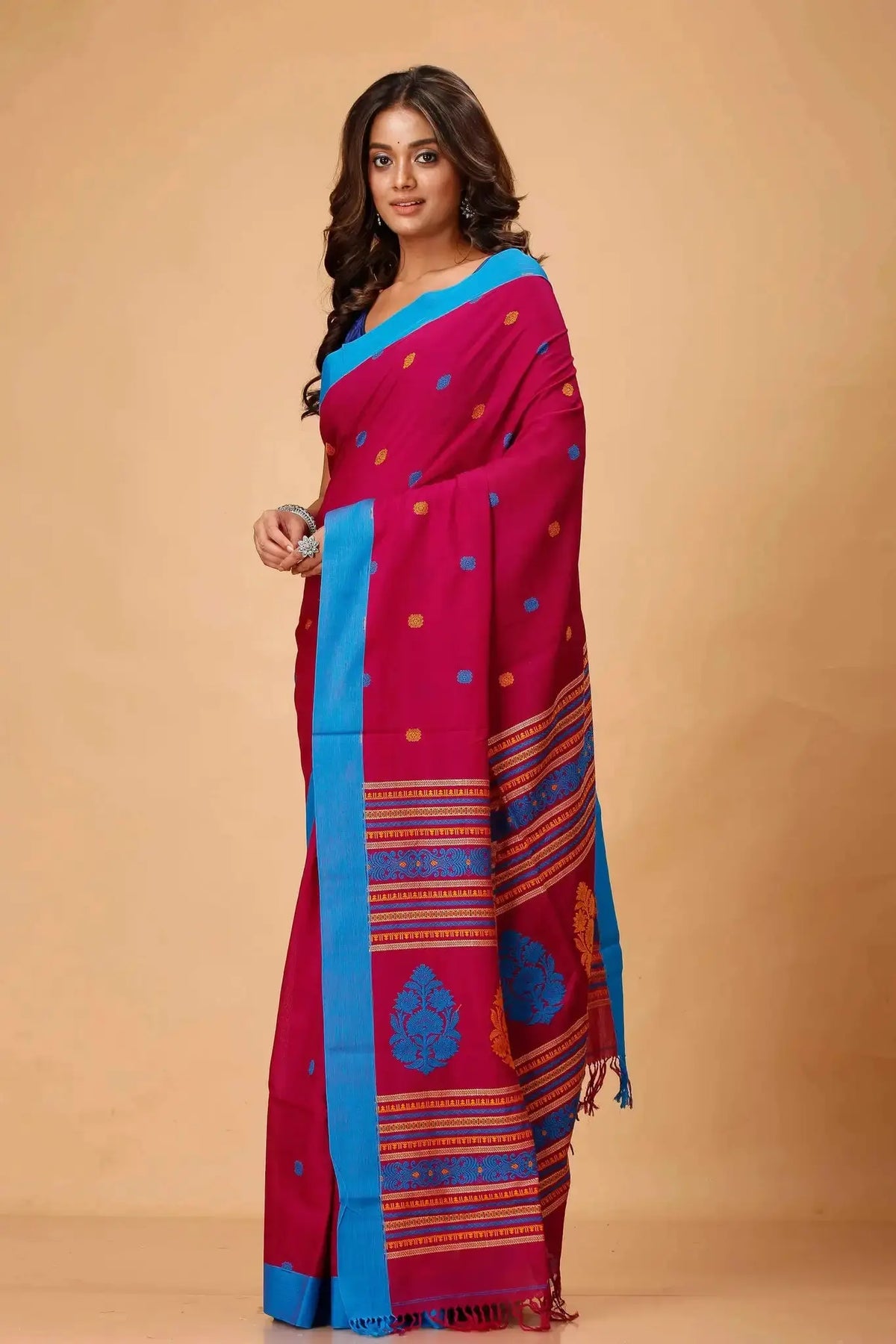

The saree, a quintessential symbol of Indian culture, holds an indelible connection to its heritage. Among the rich array of sarees, the elegance of South Indian handloom sarees and the intricate artistry of Jamdani stand out. These fabrics are not just garments; they are timeless pieces of art that embody the cultural richness and textile skills passed down through generations.
The South Indian Saree: A Tapestry of Tradition
South India is renowned for its vibrant saree traditions, each region showcasing unique weaving styles, colors, and motifs. Handloom weaving is a deeply rooted cultural craft, particularly evident in the states of Tamil Nadu, Karnataka, Andhra Pradesh, Telangana, and Kerala. The artistry and craftsmanship of these sarees, often made from 100% cotton, boast a rich tapestry of history and heritage.
Kanjeevaram: The Pride of Tamil Nadu
One of the most celebrated South Indian sarees is the Kanjeevaram, originating from the town of Kanchipuram in Tamil Nadu. Known for its vibrant colors, durable fabric, and intricate designs, Kanjeevaram sarees are crafted with pure mulberry silk and woven with gold or silver threads (zari). They often feature traditional motifs such as peacocks, elephants, and temple borders.
Banaras and the Influence of South Indian Weaving
While the Kanjeevaram saree reigns supreme in Tamil Nadu, the influence of South Indian weaving extends to the production of rich fabrics in Northern regions. Interestingly, many artisans from South India migrated to Banaras, bringing with them their traditional weaving techniques. This cross-cultural transfer greatly enriched the artistry found in the renowned Banarasi sarees.
Exploring Other South Indian Handloom Treasures
In addition to Kanjeevaram, South Indian regions are home to a vast collection of handloom sarees. Each state contributes its own signature style:
- The Gadwal Sarees from Andhra Pradesh are famous for their cotton bodies and silk borders, crafted in stunning ikat patterns.
- Karnataka's Ilkal Sarees combine cotton and silk materials, known for their unique red-bordered pallus with traditional motifs.
- Kerala's Kasavu Sarees are distinctive white or off-white sarees made with gold zari borders, often worn during festivals and special occasions.
For more on exploring South Indian cotton sarees, visit Grivana.
The Mastery of Jamdani
The Jamdani weave is an ancient art form that originates from the Bengal region, known for its exquisite craftsmanship and delicate motifs. Recognized as an Intangible Cultural Heritage of Humanity by UNESCO, Jamdani is a testament to the skill and creativity of Bengali weavers.
A Deep Dive into Jamdani's History
Traditionally woven on the banks of the Dhaka river, Jamdani's history stretches back over a millennium. Though its roots lie in present-day Bangladesh, during periods of tumult and migration, the art form was carried into parts of India, particularly in West Bengal.
Jamdani sarees are characterized by their lightweight texture and intricate patterns woven into the fabric. Weavers use a supplementary weft technique, resulting in detailed motifs such as flowers, vines, and geometric patterns, rendering the saree both a visual and textural marvel.
The Legacy of Bengal Handloom

Bengal handloom is a significant contributor to India's textile narrative. The region's weavers are celebrated for their meticulous craftsmanship across various textile forms, with Jamdani being a crown jewel.
Jamdani sarees exude elegance and grace, and they are often woven from 100% cotton, adding comfort alongside beauty. Among the many notable pieces is the Chocolate Brown - Bengal Handloom Traditional Cotton Saree, which showcases the quintessential features that make Bengal handloom renowned.
Integrating South Indian and Jamdani Traditions

The convergence of South Indian and Jamdani weaving traditions highlights the diversity and unity of Indian textile art. Blending techniques and styles from these two regions has led to innovative saree designs that maintain traditional integrity while embracing modern aesthetics.
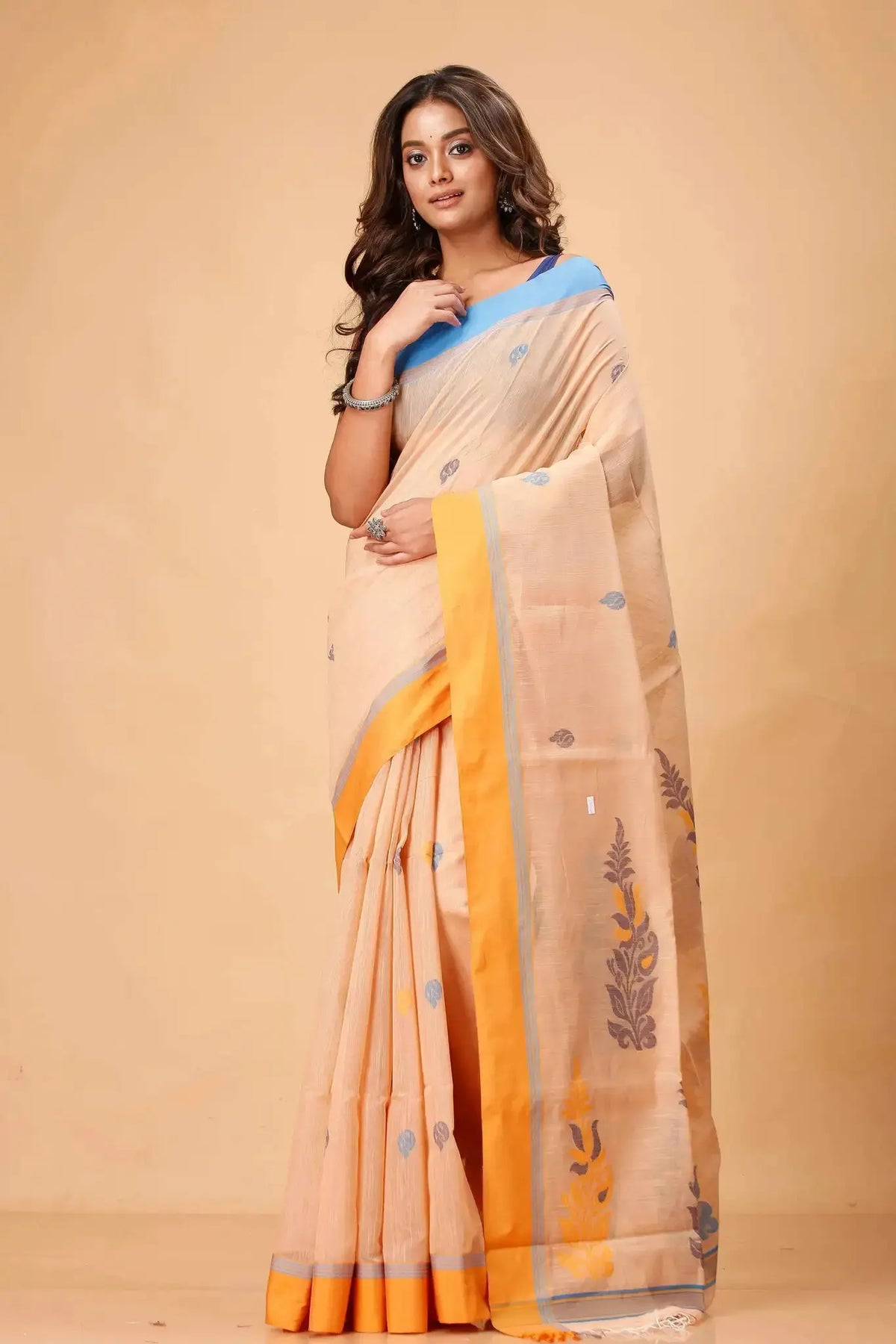
One such offering that embodies this artistic fusion is the Elegant Mustard Beige Soft Cotton Saree With Contrast Woven Pallu. It integrates the soft textures synonymous with Southern sarees and the intricate woven pallus reminiscent of Jamdani craftsmanship.
Celebrating the Modern Craftsmanship

Today's designers continue to draw inspiration from historic handloom traditions and seek to preserve these ancient crafts by adapting them to modern sensibilities. This renaissance of traditional weaving is strongly supported by discerning consumers who appreciate the depth, history, and skill that each of these sarees represents.
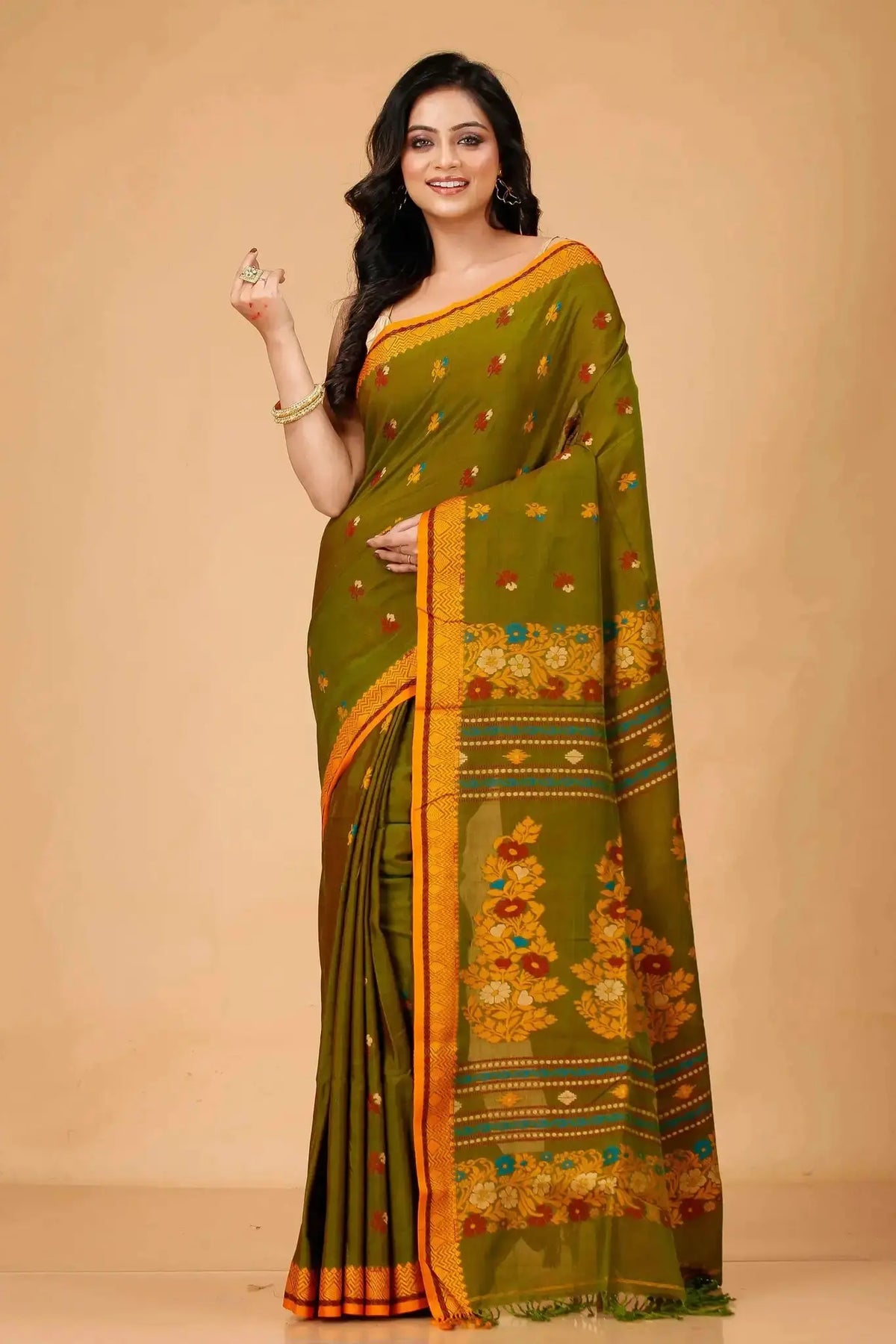
For those seeking vibrant, expertly woven pieces such as the Elegant Olive Green Manipuri Cotton Saree With Mustard Border & Floral Pallu or the Elegant Pale Yellow Manipuri Cotton Saree with Olive Green Border & Floral Pallu, these are not mere additions to a wardrobe, but investments in an art form.
Conclusion
The history of South Indian saree handloom traditions and Jamdani is illustrious and awe-inspiring. Each saree tells a story of cultural fusion, artistic prowess, and generations of artisans preserving their important legacy. Embracing such finely crafted pieces, whether from the vibrant regions of the south or the intricate looms of Bengal, is a nod to the past, present, and future of textile craftsmanship.
Explore these mesmerizing sarees and more by visiting Grivana, where you'll find a curated selection of exquisite handlooms that reflect India's rich cultural heritage.